
Somewhere in Australia right now, a production manager is reconciling three spreadsheets, a whiteboard, and a gut feeling — and calling it a planning system. If that sounds uncomfortably familiar, pull up a chair. This is the complete guide to manufacturing ERP in 2026: what it actually does, why Australian manufacturers are moving to it in droves, and how the pieces — MRP, shop floor control, quality, and costing — fit together. We'll use Odoo as our working example, partly because it's what we implement, and partly because it makes the concepts refreshingly easy to see.
What Is a Manufacturing ERP, Really?
Strip away the acronym soup and an ERP (Enterprise Resource Planning system) is one database that knows everything your business knows: what you sell, what you buy, what's in the warehouse, what's on the machines, and what it all costs. For a manufacturer, that single-source-of-truth idea is the whole game. When your bill of materials, stock levels, and sales orders live in the same system, planning stops being detective work.
The alternative — the spreadsheet-and-heroics model — works right up until it doesn't. Usually a Tuesday.
MRP: The Beating Heart
Material Requirements Planning answers three deceptively simple questions: what do we need, how much, and when? It starts with demand (confirmed sales orders plus forecast), explodes it through your bills of materials, nets off what's already on hand or on order, and spits out a schedule of manufacturing orders and purchase orders — each timed by lead time so materials land just before they're needed.
Think of it as a very patient colleague who reads every BoM, every stock card, and every supplier lead time overnight, then leaves a to-do list on your desk. In Odoo, that colleague runs continuously: replenishment rules, reordering points, and make-to-order routes trigger automatically, so a confirmed sale can create the manufacturing order, which creates the component purchase orders, without anyone touching a keyboard.
Shop Floor Control: Where Plans Meet Reality
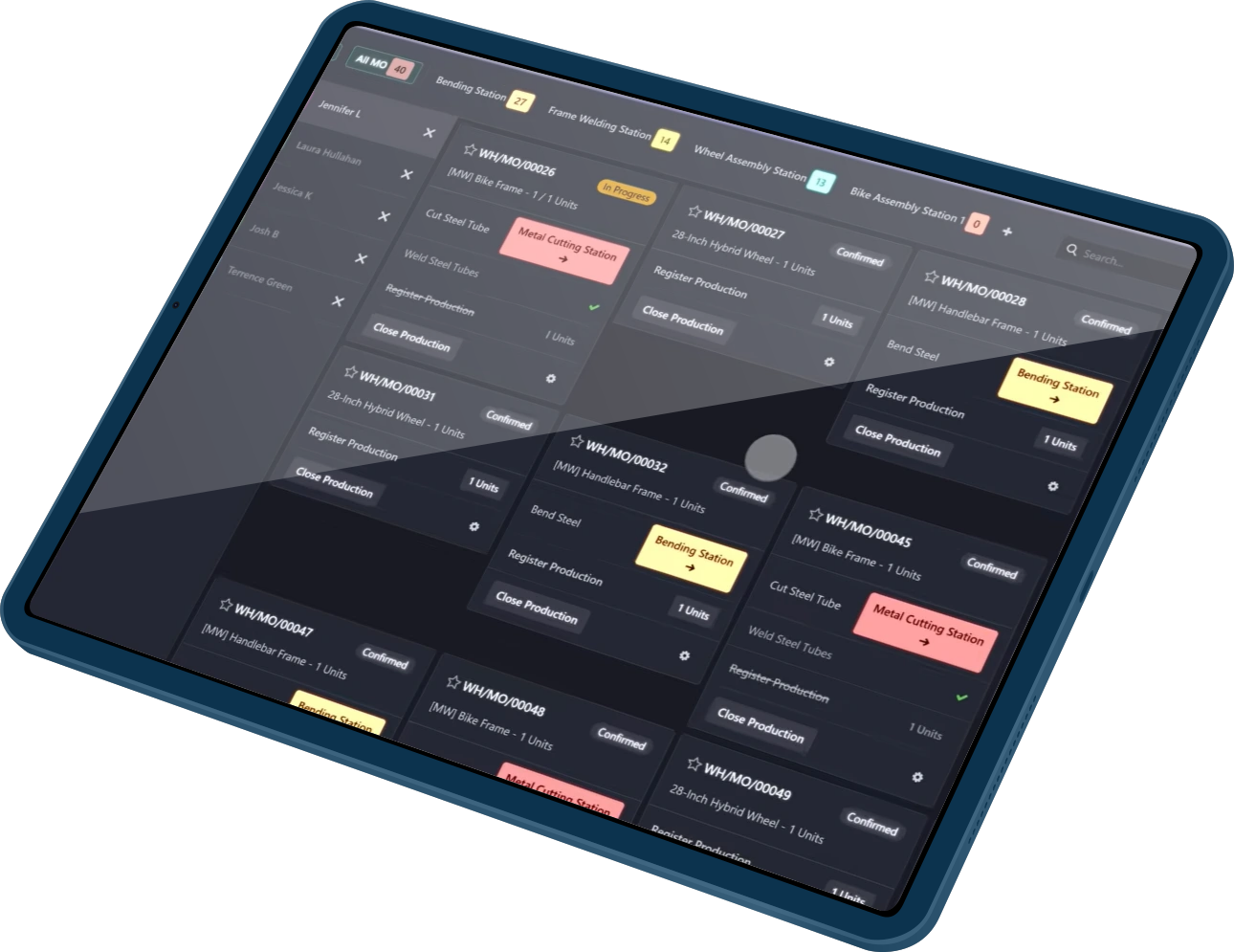
A plan is a lovely thing. The shop floor is where it goes to be tested. Modern shop floor modules replace paper travellers with tablets at each work centre: operators see the queue, open the work order, follow the worksheet, log time and quantities, and flag issues in real time. Every scan and click feeds back into the schedule, so when a CNC machine decides to take an unscheduled holiday, planning knows within minutes — not at Friday's production meeting.
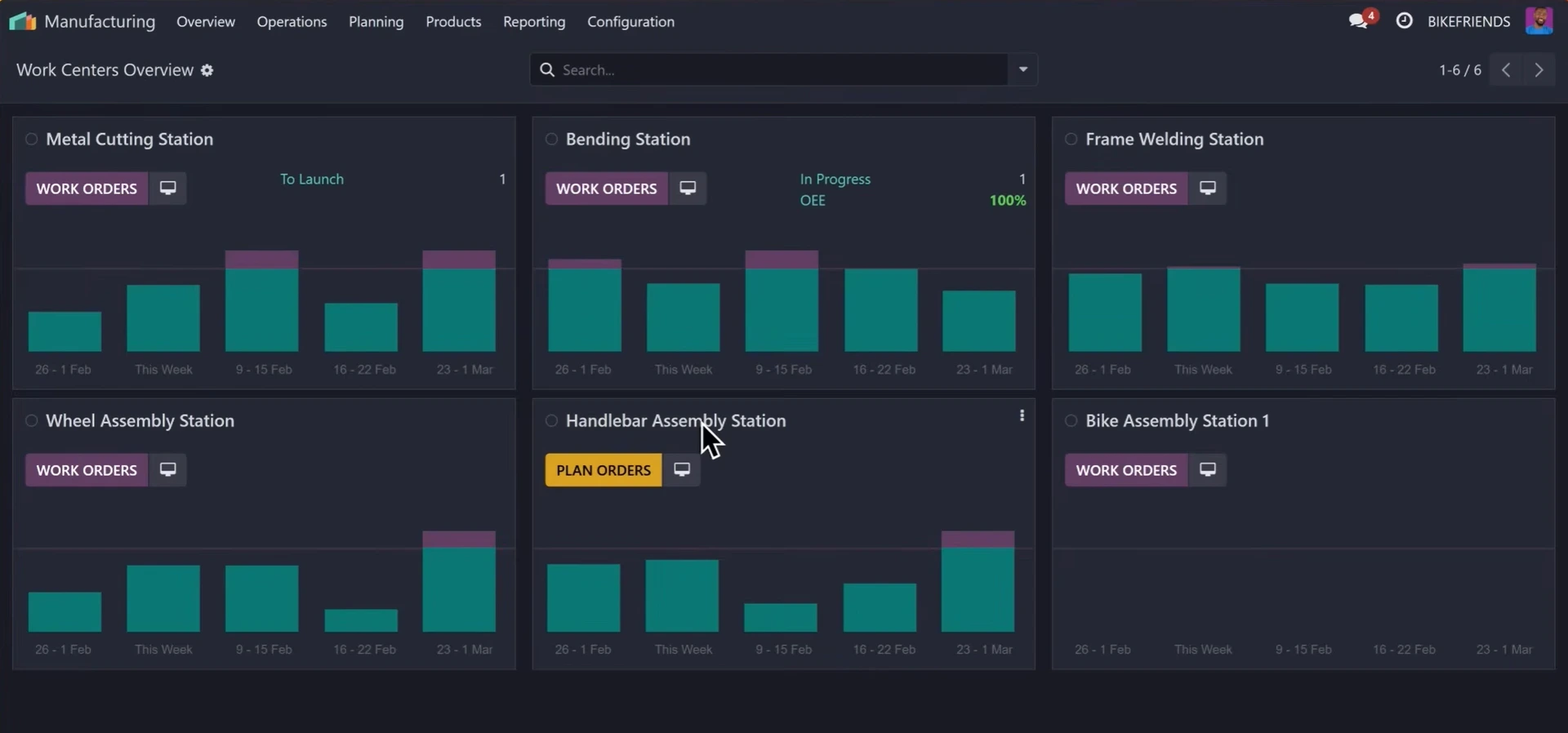
Odoo's Shop Floor app adds work-centre dashboards, barcode-driven moves, and an overall equipment effectiveness (OEE) view, so 'how are we tracking?' becomes a glance rather than an interrogation.
Quality: Built In, Not Bolted On
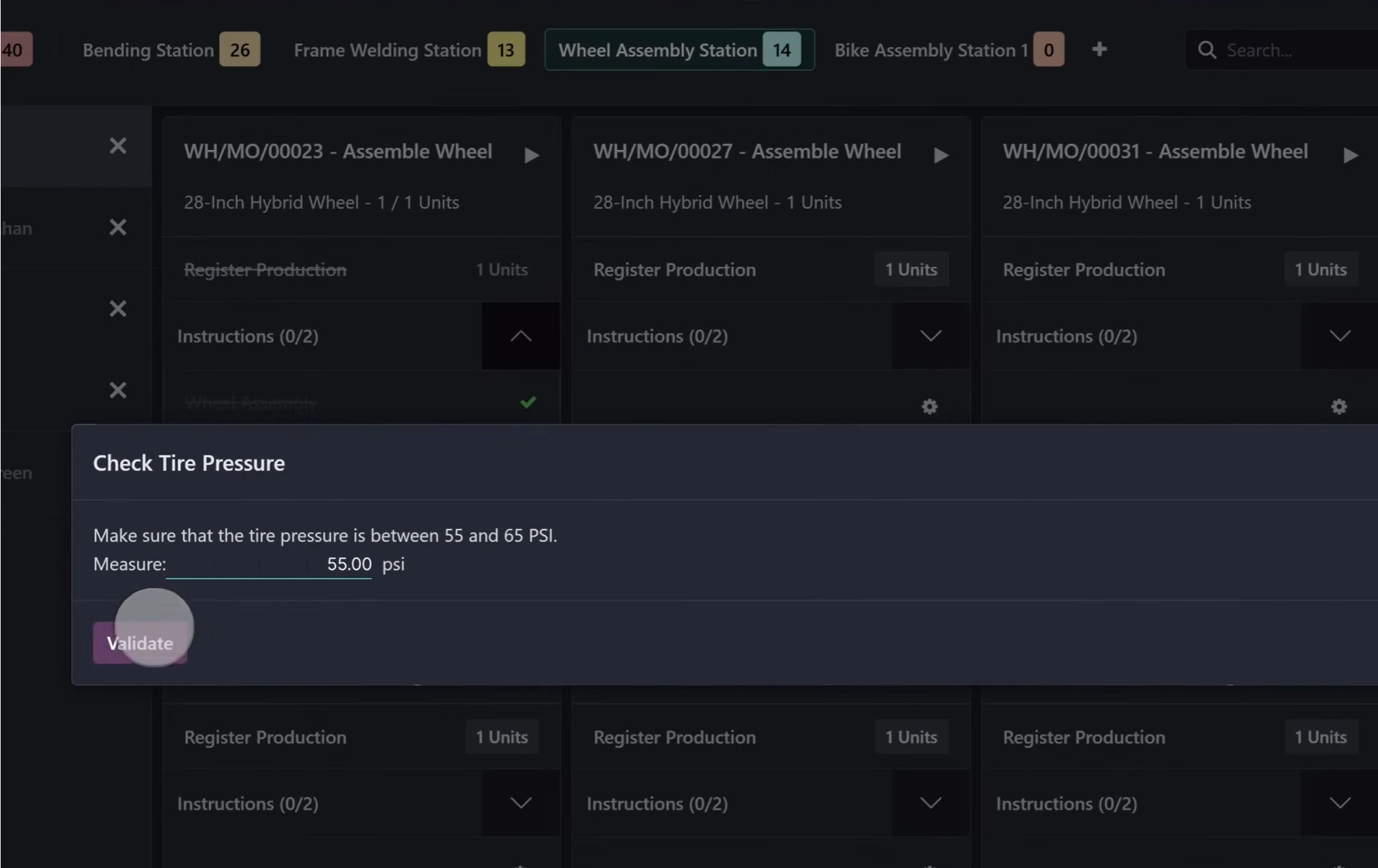
Quality management in a modern ERP isn't a filing cabinet of PDFs — it's control points woven into the workflow. Receive raw material? A quality check fires before it can be putaway. Finish a work order? An inspection is required before the goods move on. Fail a check? A quality alert opens, the stock is blocked, and non-conformance follows a proper corrective-action loop. For manufacturers working to ISO 9001 (or supplying anyone who is), the audit trail writes itself as a by-product of doing the work.
Costing: Knowing What Things Actually Cost
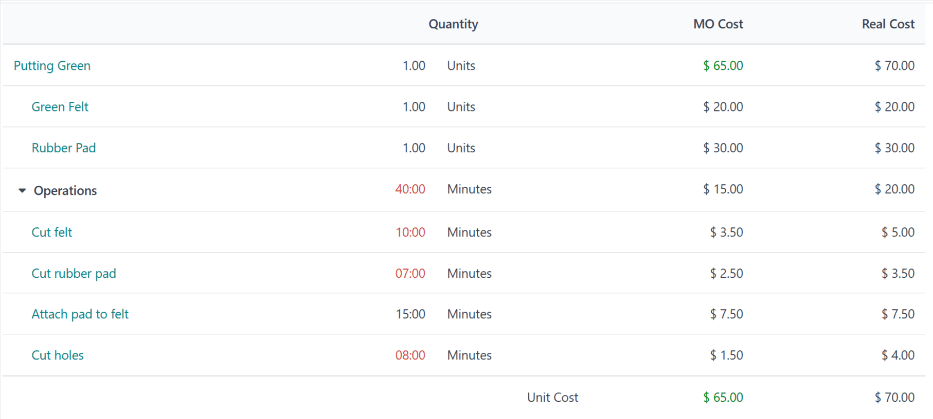
Here's the quiet scandal of manufacturing: plenty of businesses don't know their true cost per unit. Materials, sure. But labour at actual hours? Work-centre overhead? Scrap? A proper ERP rolls all of it into the manufacturing order, so each production run has a real cost — and your margins stop being a rumour. Odoo supports standard, average, and FIFO costing with analytic accounting on top, which means you can finally answer 'should we make this or buy it?' with numbers instead of vibes.
Why 2026, and Why Australia?
Three forces are converging. First, labour is scarce and expensive — automation of admin (not just machines) is the fastest productivity win available. Second, customers now expect real-time order visibility and accurate promise dates, which spreadsheets structurally cannot deliver. Third, cloud ERP has collapsed the price of entry: what once required a seven-figure SAP project is now within reach of a 15-person job shop. Local compliance — GST, BAS-ready reporting, Australian payroll integrations, and single touch payroll — comes along for the ride with a well-configured Odoo implementation.
How to Choose (a Short, Honest Checklist)
Look for: a native MRP engine (not a bolted-on plugin), shop floor terminals your operators will actually use, quality checks embedded in operations, real-time costing on manufacturing orders, and open APIs for the machines and eCommerce channels you already run. Then look at total cost of ownership over five years, not the first invoice. An ERP is less like buying software and more like hiring your most reliable employee — one who never takes annual leave and remembers every BoM revision since 2019.
If your production planning still lives in a spreadsheet named FINAL_v7_USE_THIS_ONE.xlsx, it might be time for a conversation. WMSSoft implements Odoo for Australian manufacturers end to end — MRP, shop floor, quality, costing, and everything in between.
Where to From Here?
Get in touch and we'll show you what your factory looks like when the whole thing runs on one system. Your spreadsheets have earned the retirement.